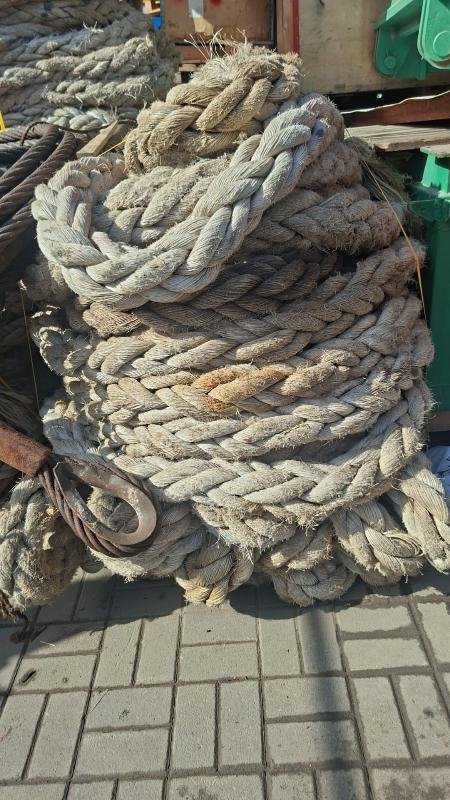
Good question to clarify — genuine manila rope isn’t plastic at all. It’s a **natural fiber** made from **abaca** (Musa textilis), a species of banana plant native to the Philippines. That’s why it’s sometimes called “Manila hemp,” even though it’s not related to hemp botanically.
However, there’s a lot of confusion in the market because **synthetic ropes are often sold as “manila-look” or “manila-style” rope** — these mimic the color and texture of real manila but are made of plastic. If your scrap includes these, here’s how to tell them apart:
## Types of plastic used in “manila-style” synthetic rope
**Polypropylene (PP)** – the most common substitute; cheap, lightweight, tan-colored to resemble manila.
**Polyethylene (PE)** – less common, sometimes blended or used for lower-cost cordage.
**Nylon (Polyamide)** – rare in manila-look rope, but occasionally used where more stretch/strength is needed.
**Polyester** – occasionally used for “faux manila” decorative rope, valued for UV resistance.
## How to recognize natural manila vs. synthetic (plastic) rope
**Burn test (most reliable)**
– **Manila (natural fiber)**: burns like paper/wood, smells like burning leaves or hay, leaves soft gray ash, flame doesn’t melt.
– **Polypropylene**: melts and shrinks away from flame, smells like burning plastic/wax, forms a hard melted bead, flame is often blue-based with black smoke.
– **Nylon**: melts, self-extinguishes often, smells slightly like celery or burnt plastic, forms a hard round bead.
– **Polyester**: melts, black smoke, sweetish chemical smell, hard bead residue.
**Visual/tactile checks**
– **Texture** – manila fibers are coarse, slightly hairy/fuzzy, and matte. Synthetic rope is smoother, glossier, and more uniform.
– **Fiber length** – manila is made of short, twisted natural fibers you can pick apart with your fingers; synthetic rope is continuous filament or tape, so it won’t fray into short irregular strands the same way.
– **Water behavior** – manila absorbs water and gets heavier/stiffer when wet; synthetic rope stays buoyant and doesn’t absorb.
– **Flexibility in cold** – synthetic rope stays flexible in cold weather; manila becomes stiffer.
**Density/float test**
– **Manila**: sinks in water (denser than water once natural fibers absorb moisture).
– **Polypropylene**: floats (it’s less dense than water) — this is actually the quickest field test.
– **Nylon/Polyester**: sinks (denser than water).
**Chemical resistance clue**
– Manila degrades/rots when left wet or exposed to mildew for long periods.
– Synthetic rope resists rot entirely — if a “manila-look” rope shows zero mildew damage after prolonged dampness, it’s very likely synthetic.
If you’re sorting scrap in bulk, the **float test + burn test combo** is usually enough to separate genuine manila from polypropylene fakes without needing lab equipment.
Want me to also cover how to distinguish PP from PE or nylon specifically, in case your scrap batch is mixed synthetic types rather than manila at all?